Semi-automatic ROPP capper
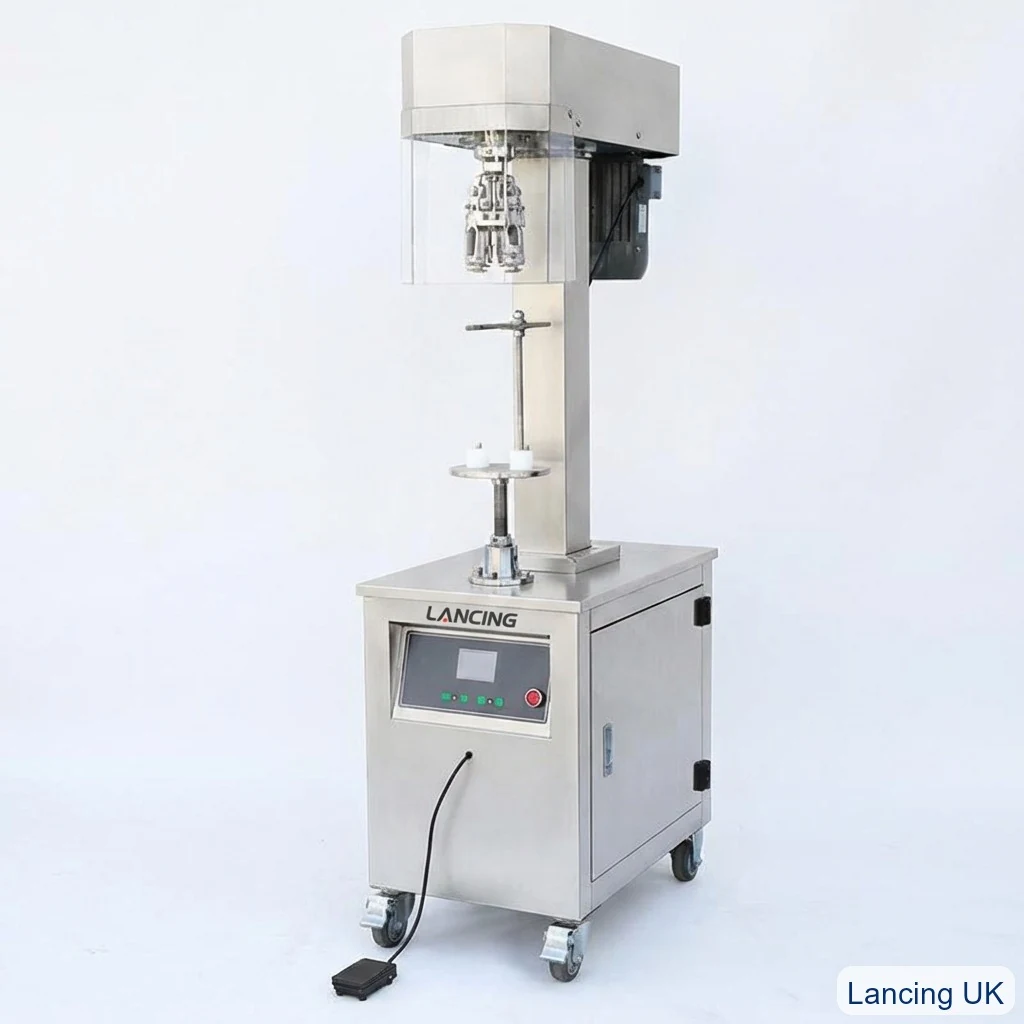
Compact operator-fed ROPP capper for controlled production, trials and lower-volume runs. Typical capacity 25–30 bottles per minute depending on operator rhythm, bottle handling and cap setup.
Lancing UK supplies semi-automatic, inline automatic and rotary ROPP capping machines for aluminium roll-on pilfer-proof closures used on wine, spirits, oils, beverages, syrups, pharmaceutical and premium glass bottle lines.
From a compact semi-automatic ROPP capper for controlled batches through to 8-head high-speed capping systems, we help match the cap, bottle neck finish, roller profile, capper head and production speed to the job.
What is ROPP capping?
A roll-on pilfer-proof cap starts as a smooth aluminium shell. During capping, the machine presses the cap onto the bottle, rolls the aluminium skirt into the thread profile, and tucks the pilfer band under the bottle neck bead. The consumer can unscrew and reseal the cap, while the broken band gives visible evidence that the bottle has been opened.
Machine range
Use the range below to shortlist the right capper. Final specification should be confirmed against your actual bottle, cap, liner, filling process, output target and downstream line layout.
Compact operator-fed ROPP capper for controlled production, trials and lower-volume runs. Typical capacity 25–30 bottles per minute depending on operator rhythm, bottle handling and cap setup.
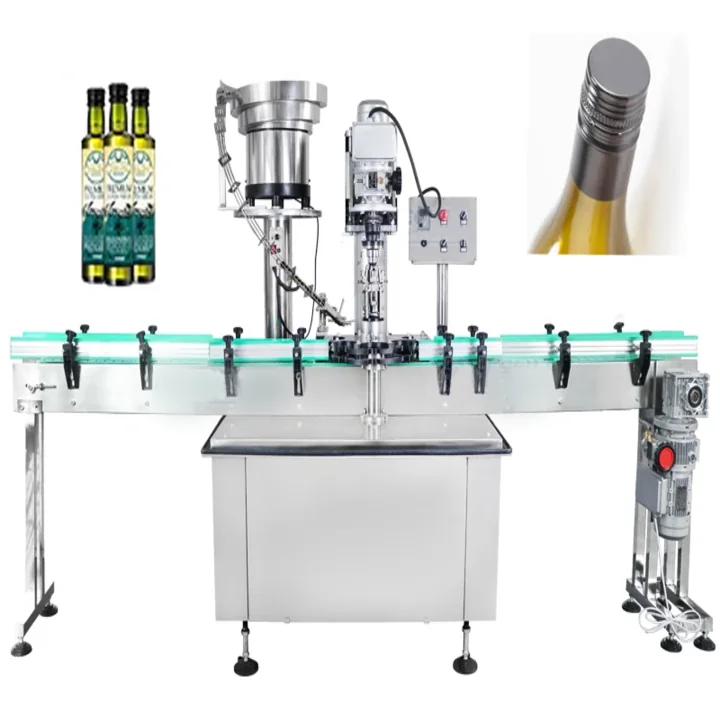
Inline automatic ROPP capper range for beverage, wine, oil and pilfer-proof cap applications. Configurations include single and multi-head systems with conveyor, cap feeding and production line integration.
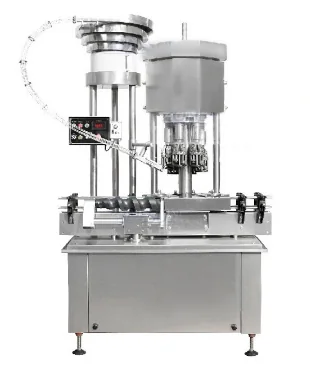
High-speed rotary capping system engineered for applying ROPP caps to glass bottles with an 8-head turret and cap feeding. Ideal where consistent high-output closing is required.
How ROPP capping works
The exact roller sequence depends on the cap, neck finish and machine design, but a properly configured ROPP process follows the same engineering logic.
The aluminium cap is placed or fed onto the bottle neck. Star wheels, bottle supports or guides locate the bottle so the cap arrives square to the capping head.
The pressure block pushes the cap down to compress the liner against the bottle sealing surface. This is critical for leak resistance and consistent opening performance.
Thread rollers move into the aluminium skirt and form the cap around the bottle neck thread profile. The formed thread allows the cap to be unscrewed and resealed.
Lower rollers tuck the security band under the neck bead. When the consumer opens the bottle, the bridges break and the band provides visible tamper evidence.
Good production control checks cap height, band position, bridge condition, thread definition, seal quality and opening torque using agreed test methods.
Specialist selection checklist
Send as much of this as possible and Lancing can advise machine type, tooling, head selection, feed method and integration requirements.
Applications
ROPP caps are widely used for glass bottle spirits, miniature bottles, wine and products requiring premium shelf appearance with tamper evidence.
ROPP closures support premium oil bottles where shelf presentation, resealability and leak resistance are important.
Size-dependent ROPP formats can be used on healthcare, medical and pharmaceutical bottles where controlled closure integrity is required.
Suitable for still beverages, flavourings, syrups and products packed in compatible bottles with aluminium pilfer-proof closures.
Flexible ROPP tooling and changeover planning help contract packers run multiple bottle and cap formats across a shared closing line.
ROPP can be considered for premium liquids and technical products where cap finish, tamper evidence and repeatable opening performance matter.
At-a-glance specifications
Final specifications vary by project. Use this table for quick comparison before sending samples for confirmation.
| Machine | Best for | Typical output | Key format data | More details |
|---|---|---|---|---|
| Semi Automatic ROPP Capping Machine | Batch work, trials, start-ups, specialist formats | 25–30 bottles/min | 20–50mm cap diameter, 60–350mm bottle height | Semi-auto page |
| Automatic ROPP Pilfer Proof Capping Machine | Inline beverage, oil, wine and spirits lines | 2,000–8,000 pcs/h depending on model | Configured to bottle, closure and conveyor layout | Automatic page |
| LU-XG440C8 8-Head ROPP Capping Machine | Higher-speed rotary closing | 7,500 pcs/hour | Φ30–90mm bottle diameter, Φ22–38mm mouth, 100–330mm height | 8-head page |
ROPP capping FAQ
ROPP stands for roll-on pilfer-proof. The closure is usually an aluminium shell that is rolled onto a bottle neck so the thread and tamper-evident band are formed during capping.
Yes. Send cap diameter, bottle height, neck finish, target bottles per hour, product type and whether the cap has a liner or pourer. Lancing can advise whether a semi-automatic, inline automatic or rotary multi-head ROPP capper is the best fit.
ROPP closures are commonly used for spirits, wine, olive oil, edible oils, syrups, beverages, pharmaceutical products and premium products that need a resealable tamper-evident cap.
Key variables include cap and bottle neck compatibility, capping head pressure, roller pressure, thread roller setup, pilfer band tuck, liner compression, bottle support, cap feed consistency and torque or opening-force testing.
Yes. ROPP capping can be supplied as a stand-alone machine or integrated with bottle feeding, filling, cap sorting, conveyors, accumulation, labelling, coding and end-of-line packaging.
Send bottle photos, cap sample details, closure diameter, target output and your current line layout. Lancing will help confirm the right ROPP capping route.
Engineering specification
A ROPP capper should be selected around the production pack, not around a headline machine speed alone. The most useful project evidence combines supplier drawings, production samples, an agreed quality method and the real line conditions in which the machine will operate.
Provide production ROPP closures from the intended supplier, plus the closure drawing where available. Record cap diameter and height, liner construction, pilfer-band and bridge design, decorative finish, any pourer or insert, and the acceptable level of marking after rolling.
Provide bottles from representative production lots and the neck-finish drawing. The sealing land, thread profile, retaining bead, neck rigidity, bottle height and bottle stability all influence head pressure, roller position, support and change parts.
Define the product, line layout, planned bottles per hour, changeover frequency, upstream filler, downstream labeller, cap-feed method and inspection point. This identifies whether a semi-automatic capper, inline automatic system or rotary multi-head machine is the practical route.
Acceptance evidence
Published outputs on this site are reference figures for the stated machine configurations. A quotation, factory trial and final acceptance record should define the bottle, cap, product condition, cap supply, operator or feeder arrangement, inspection method, permitted rejects and timed-run conditions.
| Project stage | Evidence to supply or agree | Record to retain |
|---|---|---|
| Packaging compatibility | Bottle and closure drawings, production samples, liner and insert details, agreed product contact condition. | Approved sample references and any tooling assumptions. |
| Dry capping trial | Square cap placement, liner compression, thread definition, pilfer-band location and bottle support. | Close-up photographs, machine settings and accepted first-off samples. |
| Filled-pack trial | Project-specific opening-torque method, leak or inversion method, cap-finish inspection and storage condition. | Measured results, pass/fail criteria, sample date and packaging lot. |
| Line performance | Agreed run duration, infeed condition, cap-feed condition, stop/start behaviour, rejects and downstream flow. | Timed output, fault log, reject causes and approved operating window. |
| Changeover | Format parts, labelled settings, first-off checks, cleaning and operator access. | Change-parts list, set-up record and approved sample for each format. |
Opening torque, leak resistance and tamper-band appearance should be checked by a method agreed with the closure supplier and your own quality team. Changing the instrument, conditioning time, sample handling or pass criteria makes one trial difficult to compare with another. The ROPP capping guide, torque-testing guide and neck-finish guide set out the information to document.
A correctly formed closure still depends on stable bottle infeed and reliable cap presentation. If the project needs dedicated orientation, bulk storage or chute design, use the specialist cap feeder route. For a complete fill-cap-label project, define the line interfaces before individual machines are approved.
Send bottle and closure drawings, representative samples, target output and your proposed quality checks.