
Drawing review
Confirm that the bottle finish and closure are intended to work together, identify controlled revisions and list any dimensions or tolerances that require supplier confirmation.
The bottle neck finish controls how well the aluminium ROPP cap can be formed. The thread profile, sealing land and retaining bead must work with the cap dimensions and the capping head rollers.
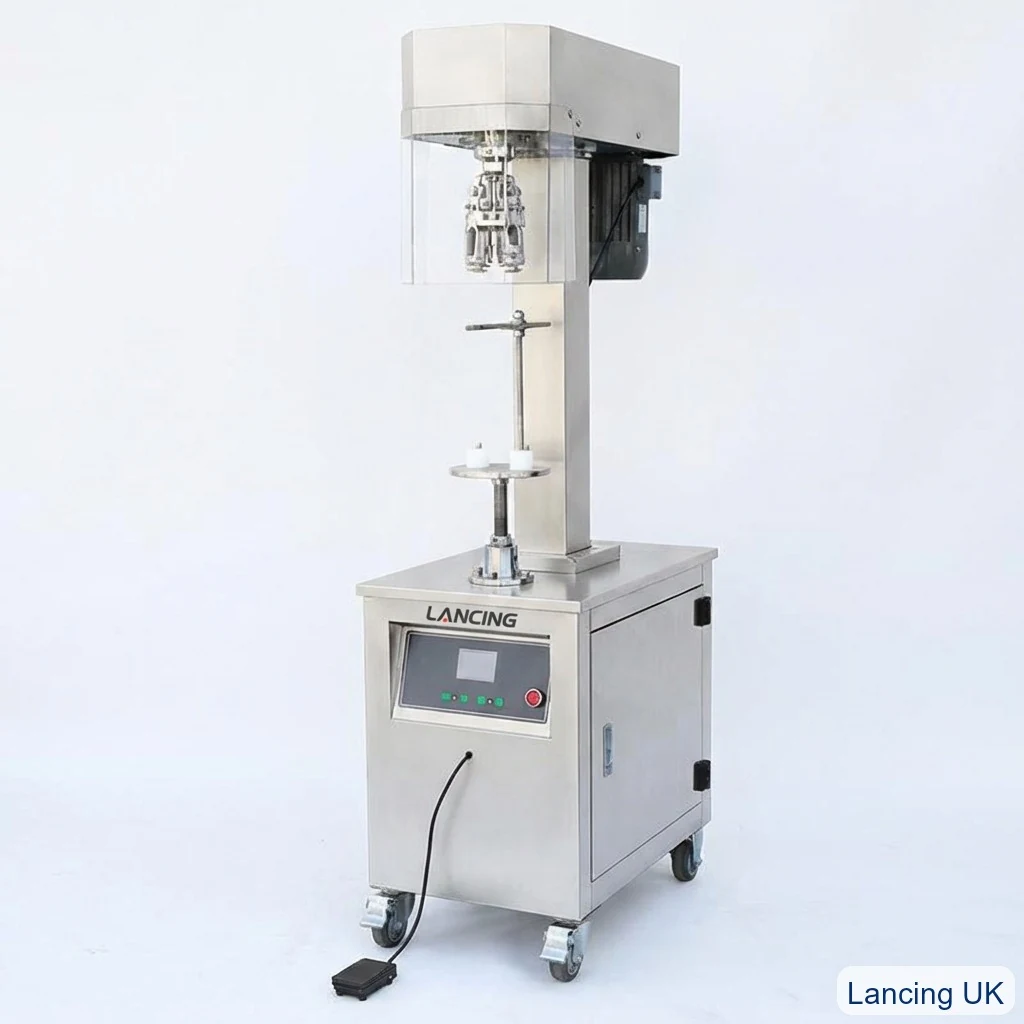
Neck finish details
A capping machine cannot compensate for a closure and bottle combination that does not match. Before selecting the capper, confirm the cap drawing, bottle drawing and physical sample quality. This reduces the risk of leaks, band faults and poor opening torque.
For best results, treat the cap, bottle and machine as one system. Lancing UK can review samples and advise whether a semi-automatic, inline automatic or rotary multi-head ROPP capping system is the correct route.
Selection table
Use these checks to narrow the machine choice and avoid packaging compatibility problems.
| Area | Why it matters | Action |
|---|---|---|
| Sealing land | Surface where liner contacts the bottle | Affects leak performance |
| Thread profile | Shape that cap skirt is rolled into | Controls opening and re-closing |
| Retaining bead | Feature that holds the pilfer band | Controls tamper evidence |
Process
A documented setup gives better repeatability and easier troubleshooting.
Collect bottle drawing and cap drawing.
Compare physical samples against drawings.
Run dry capping trials before filled-pack trials.
Inspect cap height, thread and band location.
Repeat checks with production batch samples.
Related ROPP guidance
These pages cover machine range, automatic options, troubleshooting and the enquiry route for bottle and cap samples.
FAQ
The cap is formed directly onto the neck finish, so the thread, sealing surface and bead geometry determine how the closure performs.
Yes. Poor liner contact, damaged sealing lands or incompatible cap geometry can cause leaks.
It can be used on compatible rigid plastic or supported containers, but samples must be tested carefully.
Bottle samples, cap samples, supplier drawings and any torque or leak-test requirements are the most useful information.
Send your cap size, bottle height, neck finish, samples and target output for practical advice.
Controlled drawing pack
A ROPP closure is formed around the bottle finish. Small differences in geometry, rigidity or surface condition can change liner contact, thread definition, pilfer-band position and the force needed during forming.
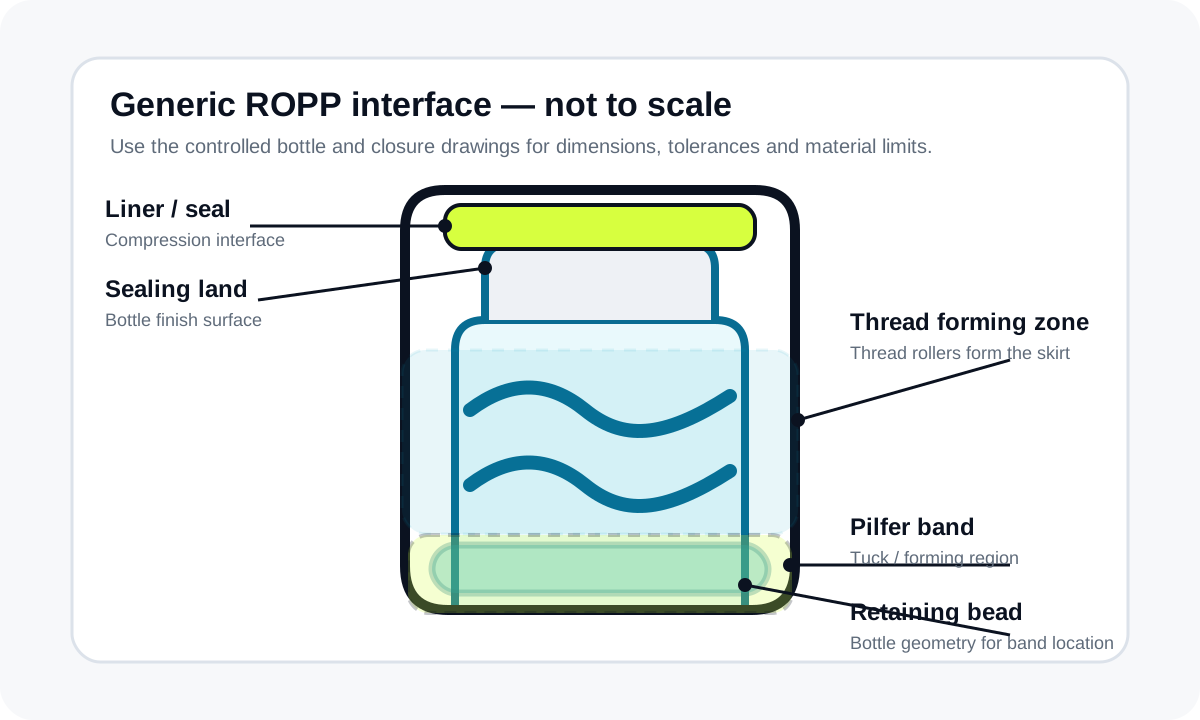
Use the controlled supplier drawings for dimensions and tolerances. This schematic is a non-dimensional guide to the interfaces that influence ROPP tooling.
| Finish feature | Why it affects ROPP capping | Evidence during the trial |
|---|---|---|
| Sealing land | Provides the surface against which the liner or seal is compressed. | Surface inspection, cap height, liner contact and project-specific leak result. |
| Thread profile | Controls the path formed into the aluminium skirt and the reclose behaviour. | Thread definition, opening feel, cap marking and cross-thread or slip observation. |
| Retaining bead | Provides the geometry beneath which the pilfer band is formed or tucked. | Band position, bridge break, visible opening evidence and bottle damage. |
| Neck support | Resists axial and roller forces and helps keep the cap square. | Bottle movement, deformation, cap skew and damage at the accepted speed. |
| Tolerance and lot variation | Changes the fit seen by a fixed tooling set-up. | Results across representative bottle/cap lots and retained boundary samples. |
Approval process
A single hand-selected sample can prove that capping is possible, but it does not prove that production tolerances are covered. The trial plan should include representative lots and any known supplier, mould, liner or decorative-finish variation.
Confirm that the bottle finish and closure are intended to work together, identify controlled revisions and list any dimensions or tolerances that require supplier confirmation.
Establish square placement, head support, liner contact, thread formation and band location without product effects masking the basic packaging interface.
Repeat the relevant opening, leak, storage and cap-finish checks using the real product condition where product contact or storage can affect performance.
Drawings plus representative production samples give the strongest basis for head, roller and support selection.
Drawing FAQ
A revised sealing land, thread, bead or tolerance can change the tooling result even when the bottle description is unchanged. Record the revision used for approval.
Use representative variation where those bottles can enter normal production. The trial should cover the practical tolerance range rather than only the best sample.
It may state the intended interface, but the controlled bottle drawing and physical samples are still needed. Resolve any conflict with the document owners before tooling approval.
Movement, flexing, cap skew, variable cap height, bottle marking or damage under the forming load can indicate that bottle support or the container itself needs review.
Use filled packs where product contact, temperature, storage orientation, liner interaction or cleaning condition can influence the final seal and opening performance.
Finish-definition questions
The full bottle and closure interface controls ROPP forming; a diameter label or visual match is not enough.
BVS and BVP identify controlled bottle-finish families used with specified aluminium screw-closure systems. They direct the project to the relevant finish and cap documents; they are not interchangeable shorthand for any bottle with a similar diameter.
Not automatically. The sealing surface, thread profile, finish height, retaining feature, tolerances and bottle support can differ even when the nominal diameter matches. Compare the complete bottle and closure drawings and confirm with representative samples.
Gauges or controlled measurements check defined geometry, while production bottles reveal real mould, lot, surface and handling variation. Both are useful: one verifies the specification and the other shows what the capper will actually receive.
Stop the tooling or approval decision and resolve the discrepancy with the bottle and closure suppliers. Identify the correct drawing revision, measure representative samples using the agreed method and document which evidence controls before trials continue.
Supply the bottle-finish drawing, closure specification and representative samples together. The selected head, settings and handling arrangement need to suit the actual combination. Agree finished-closure checks with the closure supplier's requirements in view, including appearance and opening behaviour where applicable.
Related guidance: BVS and BVP finish guide · Semi-automatic ROPP capper