
Before each batch
Check that the selected head and rollers match the approved closure, the bottle support is secure, the work area is clean and the first capped samples match the retained standard.
Compact operator-fed roll-on pilfer-proof capper for bottles requiring aluminium ROPP closures, controlled setup, low-to-medium output and flexible changeover.
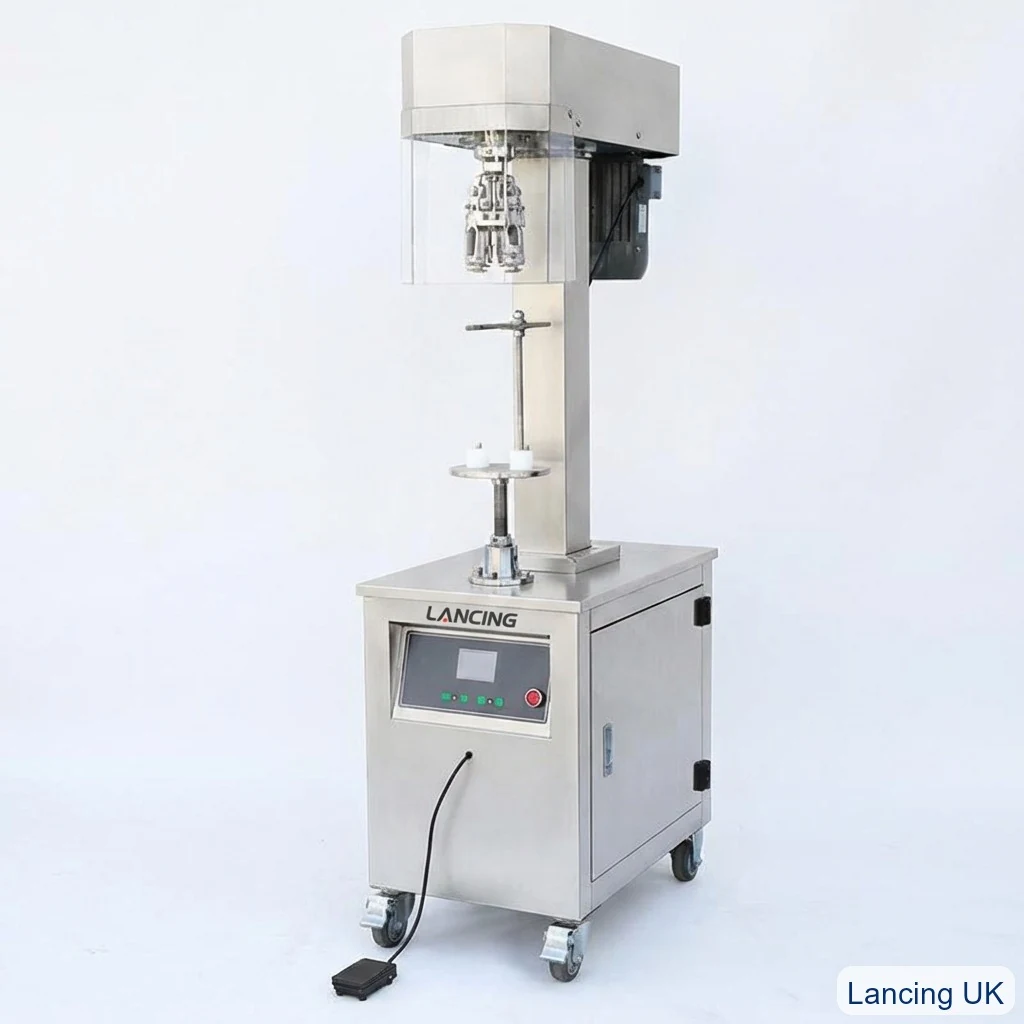
Machine overview
The semi-automatic ROPP capping machine is designed for operators who need repeatable aluminium pilfer-proof cap sealing without a full automatic line. The operator presents the bottle and cap, the machine applies controlled pressure, and the ROPP head forms the thread and tamper band around the bottle neck.
This format is especially useful for product development, contract packing, wineries, distilleries, oils, pharmaceutical-style bottle trials and low-to-medium volume production where cap presentation and seal quality matter.
Send samples to confirm cap diameter, bottle neck finish, liner compression, torque target, pilfer band finish and any support requirement.
Technical specifications
Final configuration may vary with closure, bottle and selected tooling.
| Parameter | Value |
|---|---|
| Model | LU-XG60C |
| Machine capacity | 25–30 bottles/min |
| Voltage | 110/220V 50–60Hz |
| Power | 250W |
| Suitable bottle height | 60–350mm |
| Suitable bottle caps diameter | 20–50mm |
| Net weight | 80kg |
| Machine size | About 420 × 600 × 1400mm (L × W × H) |
Gallery
For controlled batches and sample runs.
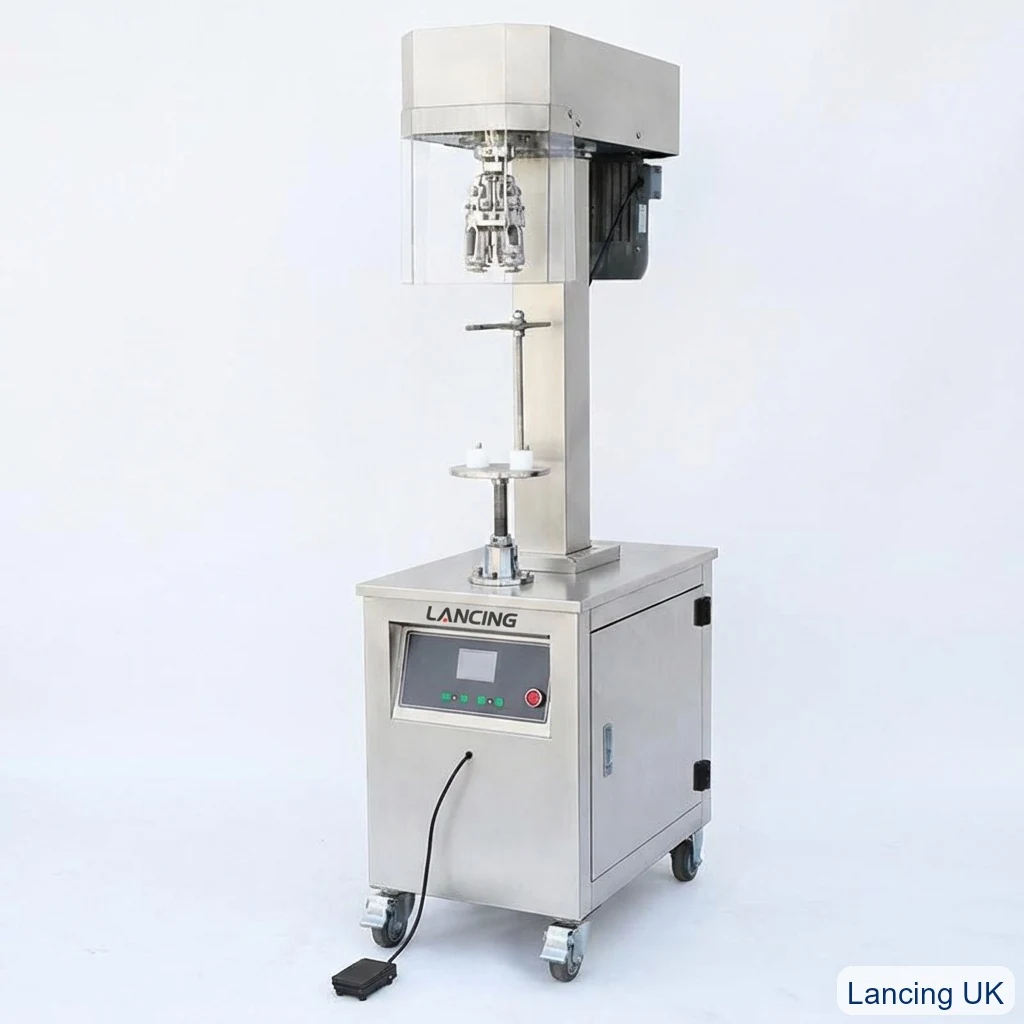
Configured around the cap and bottle neck finish.
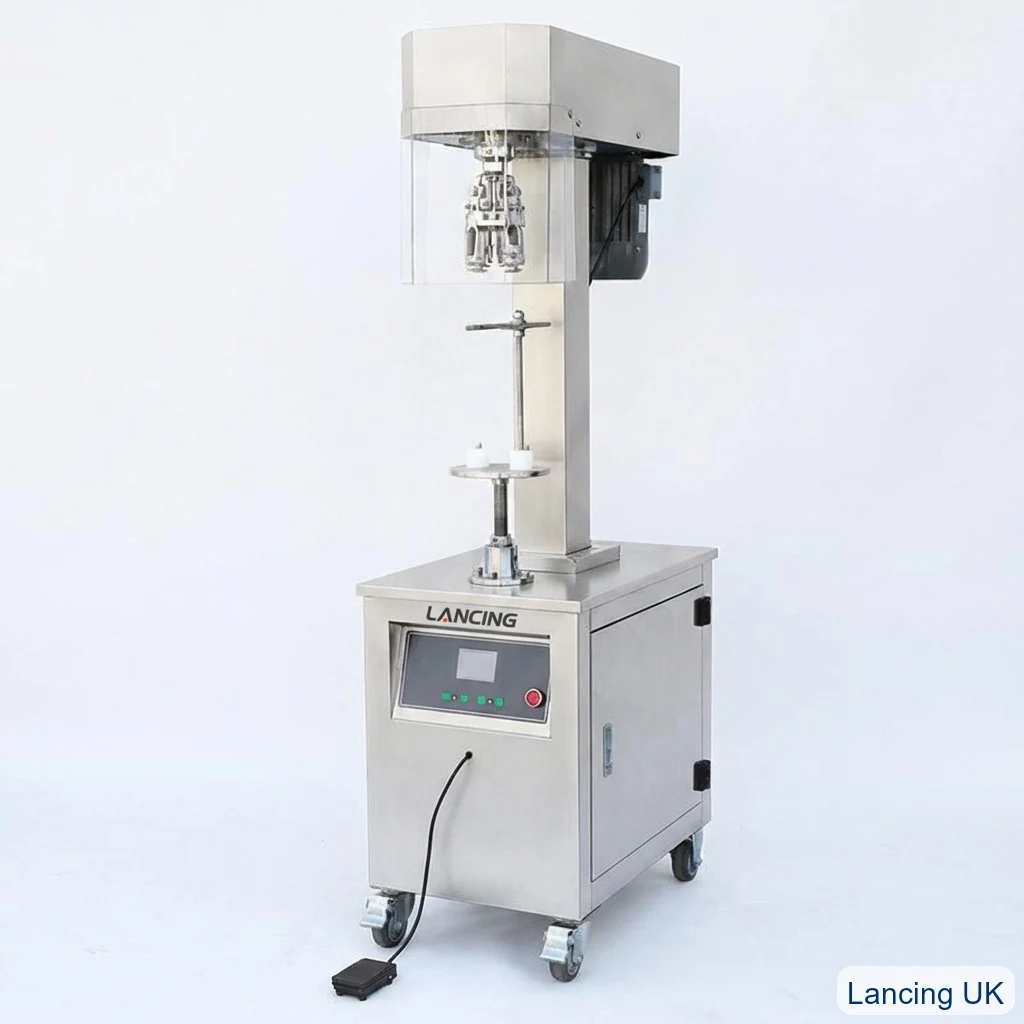
Supports a range of compatible bottle sizes.
Set-up advice
ROPP capping is a formed closure process, so set-up should be validated rather than assumed. Check cap height, thread detail, pilfer band tuck, bridge condition, top seal, cap removal torque and reseal feel.
Semi-auto FAQ
The reference machine capacity is 25–30 bottles per minute, subject to bottle handling, operator workflow, closure type and final setup.
The listed cap diameter range is 20–50mm. The exact cap size and tooling should be confirmed from samples.
Yes, subject to compatible bottle neck finish and ROPP closure. It is commonly considered for wine, spirits, oils and other premium tamper-evident bottle applications.
Send cap diameter, bottle height, neck finish and target output for a configuration check.
Operating and acceptance plan
A semi-automatic ROPP capper combines machine-controlled forming with operator-controlled bottle and cap presentation. The trial therefore needs to record both the machine settings and the handling method used to achieve acceptable results.
| Trial condition | Control during the trial | Evidence to record |
|---|---|---|
| Bottle and closure lot | Use representative production bottles and caps; identify any inserts, liners or decorative finishes. | Lot reference, photographs before capping and retained approved samples. |
| Operator presentation | Place the bottle consistently, ensure the cap is square and keep hands clear of the guarded cycle. | Written loading sequence and any bottle/cap preparation step. |
| Head and bottle support | Set machine height, bottle platform/support, top pressure and roller positions for the approved format. | Set-up sheet, tooling identity and first-off sample approval. |
| Quality checks | Use the agreed visual, opening-torque, leak and tamper-band methods. | Results by sample number, fault description and corrective setting change. |
| Timed output | Use the agreed operator, sample supply, inspection frequency and continuous run period. | Good bottles produced, rejects, pauses and the reason for each interruption. |
Changeover and care
ROPP quality can drift if height, pressure or roller positions are changed without a reference. A simple documented set-up is especially valuable where one machine handles several bottle and closure combinations.
Check that the selected head and rollers match the approved closure, the bottle support is secure, the work area is clean and the first capped samples match the retained standard.
Sample at the frequency set by the site quality plan. Watch for cap skew, marking, variable cap height, poor thread definition, an incomplete tuck or a change in opening feel.
Clean contact areas, inspect rollers and the pressure block, fit labelled tooling, restore recorded settings and approve first-off samples before releasing the batch.
It remains useful where runs are short, formats change often, operators need close control or packaging is still being validated. It can also provide a controlled way to create trial samples before specifying an automatic line.
Consider the automatic ROPP range when manual loading limits output, cap placement becomes inconsistent, operator handling is excessive or the capper must keep pace with an existing filler and labeller.
Project FAQ
Agree the operator method, sample supply, quality-check frequency and timed-run period first. Count accepted bottles and record all pauses and rejects so the result can be repeated.
Send production bottles and closures from representative lots, together with bottle and closure drawings where available. Include liner, insert and filled-product information where these affect the seal.
It may be possible, but each format must be checked for capping-head, roller, height and bottle-support requirements. Change parts and approved settings should be listed before order.
Inspect the head, rollers, pressure block, bottle support and contact surfaces; compare first-off samples with an approved standard; and repeat the agreed torque, leak and tamper-band checks.
Automatic equipment is normally considered when the filler or line speed exceeds manual handling, when automatic cap delivery is required or when repeatable conveyor-fed production is the main objective.
Send cap and bottle samples, drawings, batch size and the quality checks you need to pass.
Operator-led process control
The machine controls pressure and roller forming, but the operator normally controls bottle presentation, cap placement and cycle rhythm. Repeatability therefore depends on a simple, trainable method supported by first-off samples and recorded settings.
| Operator-controlled step | Method to define | Evidence of repeatability |
|---|---|---|
| Bottle loading | How the bottle is located on the support, where it is held and how unstable or lightweight formats are presented. | Square cap position, consistent cap height and no bottle or neck damage. |
| Cap placement | Orientation, seating position, handling of liners or inserts and checks for visibly damaged closures. | No skew, trapped insert, damaged decoration or false start before the cycle. |
| Cycle rhythm | Safe sequence for loading, initiating the cycle, unloading and placing the finished bottle for inspection. | Timed output reported with the same operator method and quality-check frequency. |
| First-off approval | Number and identity of samples checked after start-up or changeover using the site-approved methods. | Signed first-off record and retained approved bottle for visual comparison. |
| In-process sampling | Sampling frequency, test owner, action limit and response to a failed visual, torque or leak check. | Raw results linked to packaging lot, time, settings and corrective action. |
Semi-automatic capping is useful when the pack is still being proved, batches are modest or formats change frequently. The operator can retain close control of each cap and collect trial samples without first engineering a complete cap-feed system.
Use labelled tooling, a set-up sheet, an approved first-off sample and the same inspection method every time the format returns. A change in cap or bottle supplier should trigger a controlled sample review rather than an unrecorded adjustment.
Review the automatic ROPP capping route when manual cap placement constrains line flow, operator handling creates variation or the capper must synchronise with an existing filler, conveyor and labeller.
Batch evidence
Recording raw observations is more useful than recording only a pass. The evidence should show which bottle and cap lots were used, which tooling and settings were fitted, when samples were taken and what changed after any adjustment.
Maintenance boundary: clean and inspect the pressure block, rollers, supports and contact areas using the machine's approved maintenance method. Replace or adjust components only through the controlled machine procedure; do not compensate for worn tooling or out-of-spec packaging by repeatedly increasing forming pressure.
Send the bottle, closure, target batch pattern and quality method so the format can be reviewed around real production samples.
Operator-controlled process
On a semi-automatic machine, the operator is part of cap placement, bottle location, cycle initiation, unloading and first-line inspection. Standardising those actions protects both output and cap quality.
Use the approved bottle and closure, inspect the sealing surface, place the cap squarely and locate the bottle fully against the support. Separate damaged or contaminated components before capping.
Use the agreed two-hand or guarded control arrangement for the supplied machine, keep hands clear of the tooling and do not compensate for a poor cap placement by forcing the bottle.
Inspect the cap seating, shell, thread and pilfer band at the agreed frequency. Hold production if the first-off sample, retained reference or measured result is not met.
| Control | Record for each format | Reason |
|---|---|---|
| Packaging identity | Bottle, closure, liner/insert and lot references. | Prevents an unrecorded component change from being treated as a machine fault. |
| Set-up | Head height, bottle support, approved tooling and any labelled adjustment. | Allows a repeatable first-off condition after cleaning or changeover. |
| Operator method | Cap placement, bottle loading, cycle, unloading and inspection sequence. | Reduces variation caused by different handling techniques. |
| Quality release | Approved visual sample, opening method, leak method and escalation rule. | Connects machine operation with the finished-pack requirement. |
Use the sample-trial guide to approve the format and the quality-inspection guide to create a routine check. A semi-automatic machine can be an effective development tool when settings and samples are retained.
If operator cap placement or bottle handling becomes the production constraint, review the automatic ROPP range together with the cap-feed interface. Do not automate an unstable pack without first resolving the packaging evidence.
Send bottle and closure samples, the required batch pattern, format list and the checks operators must complete.
Operator and workflow questions
A semi-automatic machine should be assessed as an operator-and-machine process using the real bottles, caps and surrounding tasks.
Semi-automatic output depends on how quickly and consistently bottles and caps are loaded, whether the cap is placed squarely, the operator’s movement, inspection workload, interruptions and the time required to remove and stage bottles safely. Trial the real work method, not only the head cycle.
It may be practical at lower output, but the workload must be tested. Inspection depth, bottle handling, cap replenishment, product checks and upstream or downstream tasks can compete with safe cap placement. Define which checks are 100% and which follow a sampling plan.
Use representative bottles, caps, working height, reach, loading direction, pedal or controls, guarding, container weight and expected shift pattern. Observe repetitive movements, awkward postures and the handling of accepted and rejected bottles during a realistic trial.
Manual placement can suit short runs, frequent format changes, delicate decorated caps, development trials or projects where automatic feeding is not yet justified. It remains suitable only when the operator can place the cap consistently and the required output and quality are demonstrated.
Operator-and-machine output
Measure the complete safe work cycle: select and place the cap, load and locate the bottle, initiate the guarded cycle, unload, inspect and segregate the result. Record accepted bottles, rejects and interruptions over a stated period using the operator method intended for production.
| Control | Hold constant | Record |
|---|---|---|
| Packaging | Representative bottle and closure lots, inserts/liners and fill condition. | References, photographs and retained approved samples. |
| Work method | Operator position, cap placement, bottle loading, controls and inspection frequency. | Accepted bottles, handling pauses and observed ergonomic constraints. |
| Quality release | Cap seating, shell condition, thread, tamper band, opening and leak methods. | Results, rejects, reason codes and corrective changes. |
Download the accepted-output record and compare the result with automatic alternatives.