
Download the blank record
The existing ROPP trial record provides fields for packaging identity, settings, visual checks, torque, leak results and approval status.
A useful sample trial does more than prove that one cap can be applied. It checks the real bottle-and-closure interface, records the capping conditions and shows how finished packs will be accepted before equipment is released for production.
Direct answer
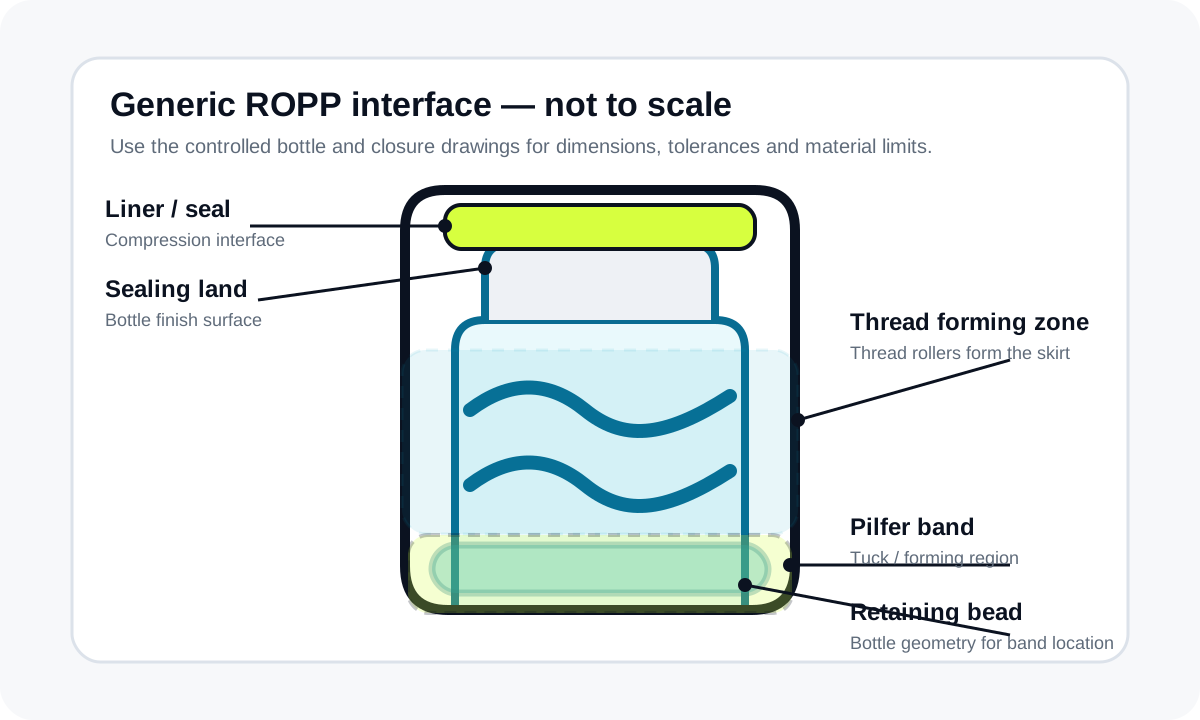
A ROPP sample trial should use bottles and closures that represent the intended production supply. The bottle finish, aluminium shell, liner, pilfer band, bridges, decoration and any insert or pourer work together as one packaging system. A machine can only be judged fairly when those items are identified and the inspection method is fixed in advance.
Start with a controlled pack review, then run dry and filled-pack trials. Keep good and rejected samples, machine settings, packaging-lot references and raw measurements. That evidence separates a packaging mismatch from a tooling, cap-feed or operating problem.
Controlled sequence
Moving straight to a long production run can hide whether a defect started with the packaging, the head set-up, cap presentation or connected-line behaviour.
Identify bottle and cap lots, compare representative samples with the available drawings and note damaged, distorted or contaminated items before they enter the trial.
Locate the bottle, place the cap squarely and establish top pressure, thread-roller and pilfer-band settings at a controlled cycle. Inspect cap height, liner contact, thread definition, band location and decoration.
Use the intended product or an agreed equivalent when fill level, neck wetting, pressure or product residues could affect the finished closure. Apply the agreed opening and seal tests after the stated conditioning period.
Where the project is automatic, test normal running, cap replenishment, controlled stops, restart, low-cap state and downstream blocking. Record interruptions and reject causes rather than reporting only gross output.
For every additional format, record the change parts, labelled settings, first-off approval and differences in bottle support or cap feed. Do not assume that one approved format proves another.
Evidence matrix
The exact limits belong to the packaging owner and closure supplier. The trial record should show the method, result and sample identity without inventing universal acceptance values.
| Trial area | Evidence to capture | Why it matters |
|---|---|---|
| Pack identity | Bottle reference and lot, closure reference and lot, liner, insert, fill condition and decorative finish. | Allows results to be traced to the actual components tested. |
| Machine condition | Machine, head or station, change parts, head height, bottle support, roller settings and cap-feed route. | Makes a repeat trial and fault comparison possible. |
| Visual finish | Cap seating, shell damage, thread profile, skirt shape, pilfer-band tuck, bridge condition and decoration. | Shows whether the closure was formed consistently and acceptably. |
| Pack performance | Agreed opening method, dimensional checks, leak or pressure method and any storage or conditioning. | Connects machine settings with the finished pack requirement. |
| Line behaviour | Feed condition, stop/restart, jams, rejected packs, timed-run definition and operator actions. | Prevents a short demonstration from being mistaken for production proof. |
The existing ROPP trial record provides fields for packaging identity, settings, visual checks, torque, leak results and approval status.
CETIE publishes finish and cap data sheets, bottling guides and test-method references for aluminium screw closures. Use the document applicable to the selected closure system together with the closure supplier’s drawing and instructions.
Open CETIE bottling guides · Open CETIE test recommendations
When to repeat
Repeat or extend the trial when the bottle supplier, neck finish, closure construction, liner, insert, shell decoration, product condition, cap-feed method, machine head or operating speed changes in a way that could affect the formed closure. A supplier drawing revision should also trigger a review before production tooling is assumed unchanged.
A repeat trial is also justified when rejected packs cluster by a particular capping head, cap lot, bottle lot, restart event or changeover. The purpose is not to generate more samples; it is to isolate the variable and establish a repeatable approved condition.
Buyer questions
Drawings are important, but physical production-equivalent samples are normally needed to confirm tolerances, cap handling, shell marking and the way the finished bottle behaves.
Use filled packs when product, fill level, internal pressure, neck wetting or storage condition could affect sealing or opening behaviour. Agree any safe trial liquid in advance.
The quantity depends on the number of formats, heads, packaging lots, tests and run conditions. Lancing should confirm the required quantity after reviewing the project.
The packaging owner should agree limits with the closure supplier and quality team. Lancing can help translate those requirements into a practical machine trial.
No. Approval should consider repeatability, packaging variation, every relevant head or station, stop/restart behaviour and the agreed finished-pack tests.
Send the bottle and closure drawings, representative samples, intended product, format list and the quality methods the pack must pass.
Extend the sample plan
Where a pourer or anti-refill component is used, include its drawing, assembly state, retention and functional tests. Do not trial only the aluminium shell.
For automatic inspection, provide representative accepted packs and defined failures at the intended line presentation, then challenge tracking and rejection as well as image classification.