
Visual and dimensional
Check cap seating, shell damage, wrinkles, thread position, skirt shape, band tuck, bridges and decoration. Where dimensions are specified, use a defined gauge or measurement point.
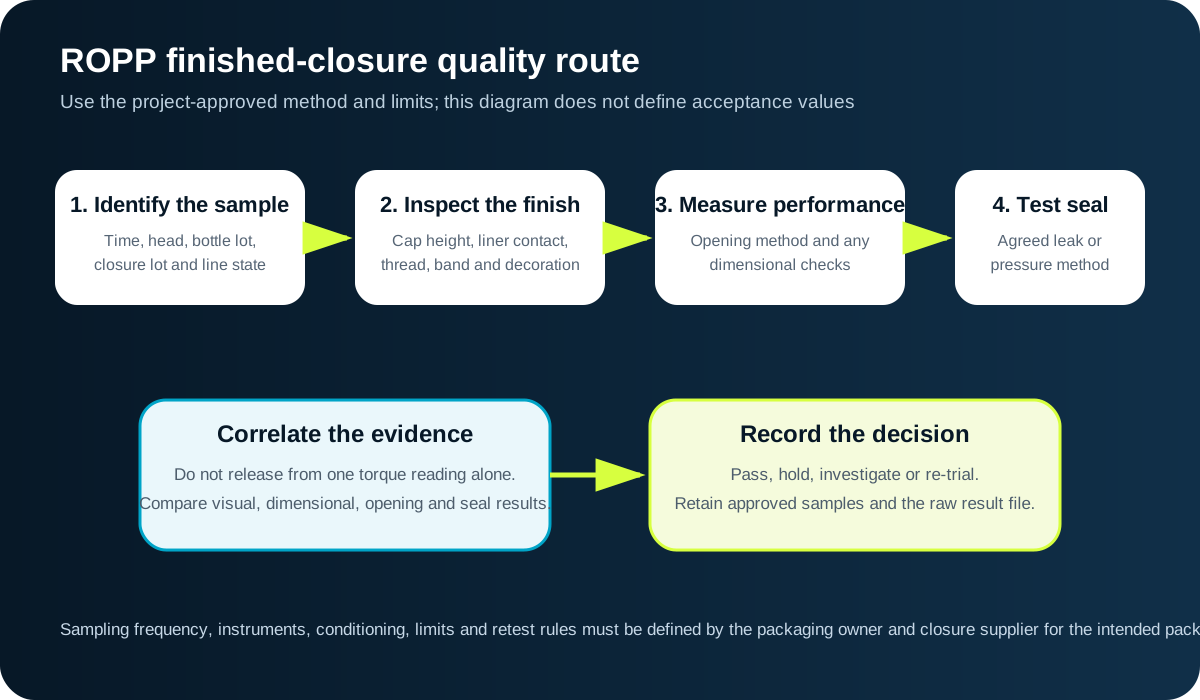
A finished ROPP closure should be judged as a packaging system, not from one torque reading. Visual finish, dimensions, opening behaviour, leak resistance and pilfer-band performance need traceable methods and correlated results.
Inspection principle
Record when the bottle was produced, which head or station capped it, the bottle and closure lots, the line state and any changeover or restart condition. Without that identity, a failed sample cannot be connected to the packaging, tooling or operating event that caused it.
Visual inspection is usually the fastest first screen, but it does not replace pack-performance testing. A cap can look acceptable while leaking, or show a cosmetic mark while still sealing correctly. The release decision should use the approved combination of checks for the actual closure system.
Inspection route
Instrument, sample handling, conditioning and retest rules should be fixed before results are compared.
Check cap seating, shell damage, wrinkles, thread position, skirt shape, band tuck, bridges and decoration. Where dimensions are specified, use a defined gauge or measurement point.
Use the same instrument, grip, speed, conditioning and reporting convention. Record the raw result rather than only “pass”. Review opening behaviour with the visual and seal evidence.
Use the project-approved leak, inversion, vacuum or pressure method for the product and closure system. Control fill condition, temperature, dwell and sample orientation.
Fault interpretation
The examples below are diagnostic directions, not universal root-cause conclusions. Confirm changes by controlled re-trial.
| Observed result | Evidence to compare | Possible investigation route |
|---|---|---|
| Low or variable opening result | Cap height, liner contact, head identity, bottle finish, closure lot and test method. | Check pack variation, compression, cap placement, thread formation and measurement consistency. |
| Leak with acceptable appearance | Sealing surface, liner condition, fill contamination, cap height and conditioning. | Inspect the bottle land and liner contact; repeat with clean controlled packs and the approved leak method. |
| Band not retained after opening | Band position, tuck profile, bridges and bottle retaining bead. | Review pilfer-roller setting, cap design, neck-finish geometry and sample variation. |
| Wrinkled or torn shell | Cap placement, bottle centring, roller contact, shell condition and cap-feed damage. | Check squareness, bottle support, head alignment and whether the closure was marked before capping. |
| Decoration scuffed | Incoming cap condition, feeder path, chute contact, transfer and roller marks. | Separate feed damage from forming marks and agree the acceptable presentation standard. |
| Fault on one head only | Head/station sample map, settings, roller condition and bottle path. | Compare the affected head with an approved head using the same packaging lot and method. |
Method references
CETIE publishes recommendation sheets for pressure-resistance testing of products bottled with aluminium screw caps and for opening-torque testing of ROPP aluminium closures. It also publishes bottling guides and defect-identification guidance. These documents do not replace the selected closure supplier’s drawing, liner instructions or the pack owner’s quality plan.
CETIE recommendation data sheets · CETIE bottling guides
Use the ROPP torque-testing guide for method controls and the troubleshooting guide to structure a fault investigation.
The blank CSV records sample identity, head, line state, bottle and cap lots, visual checks, opening results, leak results and the release decision.
Sampling
For multi-head equipment, identify each head. Sample after start-up, at agreed intervals, after replenishment or stoppage and after any adjustment that can affect closure formation.
Record bottle and cap lots. If a result shifts after a supplier or batch change, keep the earlier and later samples separate until the variable is understood.
Approve first-off packs for every format. Check the correct change parts and settings before routine production sampling resumes.
Buyer questions
No. Opening performance should be reviewed with cap appearance, dimensions where specified, liner contact, leak resistance and pilfer-band behaviour.
Yes. Labelled approved samples provide a practical visual reference for set-up, changeover, training and later fault comparisons.
Mark or capture the capping head or station for each sample. Compare samples from the same packaging lot across all heads using the same test method.
Decorative finishes may need a specific scuffing and presentation standard agreed with the closure supplier and brand owner.
The quality plan should define hold and escalation rules. A new unexplained defect, failed seal test or out-of-limit result should not be normalised without investigation and authorised disposition.
Send the closure drawing, bottle finish, required test methods, current defects and representative good and bad samples.
Inspection strategy
Automatic sensors or vision can check every presented bottle for defined visible or measurable conditions such as a missing, high or tilted cap. That can reduce the time between a visible fault and containment, but it does not automatically prove liner compression, opening behaviour, leak integrity or an internal insert condition.
Keep sampled functional tests where the quality plan requires them, and link both automatic and sampled results to the same bottle, closure, recipe, head or station and batch context.