
Change-parts schedule
List starwheels, guides, bottle supports, cap-feed parts, pressure blocks and roller tooling for each bottle/closure format. Mark common parts, format-specific parts and the setting reference used for first-off approval.
High-speed rotary ROPP capping machine engineered for applying aluminium roll-on pilfer-proof caps to compatible glass bottles with an 8-head turret and cap feeding.
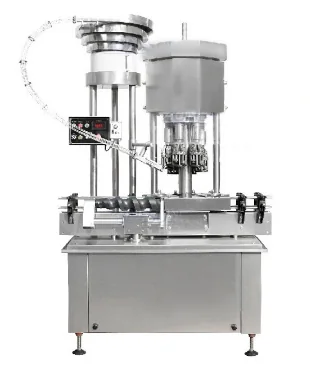
Machine overview
The LU-XG440C8 is intended for higher-speed ROPP applications where multiple capping heads work around a rotary turret. It is suited to production lines that require reliable roll-on pilfer-proof cap application at significantly higher throughput than manual or single-head solutions.
As with every ROPP system, tooling and final performance must be confirmed against bottle neck finish, cap specification, closure liner, product, required torque and line layout.
Technical specifications
Final configuration may vary with options, project scope, utility requirements and cap/bottle selection.
| Parameter | Specification |
|---|---|
| Model | LU-XG440C8 |
| Capping speed | 7500 pcs/hour |
| Power | 2.2kW |
| Bottle diameter | Φ30–90mm |
| Bottle mouth diameter | Φ22–38mm |
| Bottle height | 100–330mm |
| Machine size | 1700 × 1100 × 2000mm |
Engineering details
A rotary multi-head machine needs each bottle to enter the turret in phase with the cap feed and capping head. Change parts, star wheels and guides control bottle position while the head applies pressure and rollers form the closure. Because more heads are running continuously, sample testing and setup documentation become especially important.
Gallery
Designed for production speed closing.
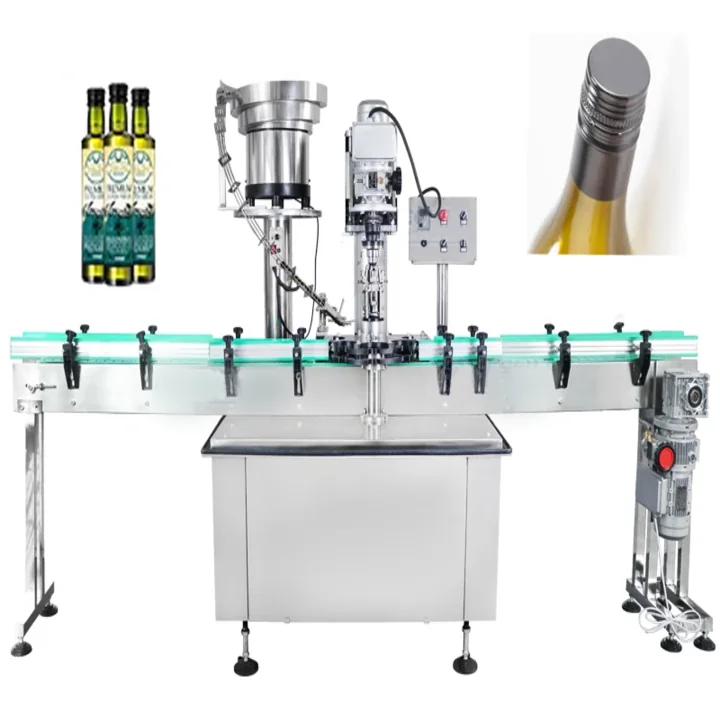
Closure handling must be matched to line speed.
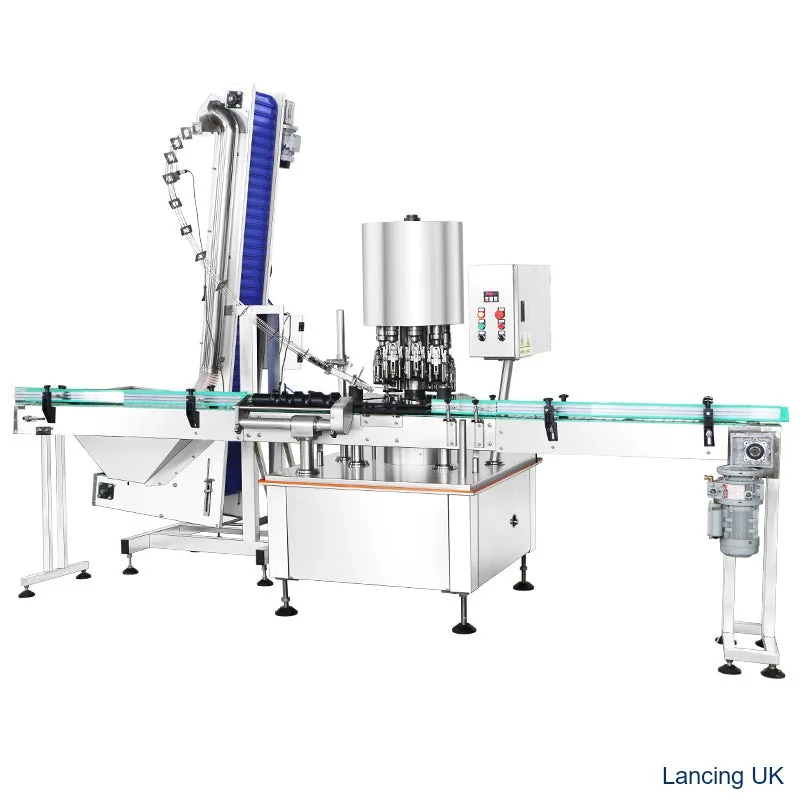
Configurable to the project scope.
8-head FAQ
It is a high-speed rotary ROPP capping machine for compatible glass bottles using aluminium roll-on pilfer-proof caps.
The reference specification lists bottle diameter Φ30–90mm, bottle mouth diameter Φ22–38mm and bottle height 100–330mm.
The listed capping speed is 7,500 pcs/hour for the LU-XG440C8 reference specification.
Send bottle and cap samples, line speed and current production layout for engineering review.
Reference specification control
The dedicated specification above lists 7,500 pieces/hour, while the wider automatic range uses an 8,000 pieces/hour reference for the same model name. The project quotation must therefore identify the exact configuration and state one acceptance value with the conditions used to prove it.
| Acceptance condition | What must be defined | What should be recorded |
|---|---|---|
| Packaging | Approved bottle drawing and samples, ROPP closure drawing and samples, liner/insert, product condition and packaging lots. | Sample references and retained approved capped bottles. |
| Cap feed | Bulk loading method, feeder bowl or sorter, transfer path, low-cap response and refill method. | Starvation, jams, misorientation, cap damage and recovery time. |
| Machine speed | One quoted line speed, agreed continuous-run period, inspection frequency and treatment of planned stops. | Accepted bottles, rejects, faults, pauses and reason for each event. |
| Head quality | Sampling plan across all eight heads and the agreed torque, leak, tamper-band and cap-finish checks. | Results linked to head number so variation is not hidden by an average. |
| Line interface | Infeed/outfeed conveyor, starwheel timing, upstream and downstream interlocks, reject route and accumulation. | Stop/start tests, bottle damage, reject handling and fault messages. |
Tooling and maintenance
Multi-head performance is repeatable only when bottle handling, cap presentation, head settings and wear checks are traceable. One incorrectly set or worn head can create an intermittent fault even when the overall line appears stable.
List starwheels, guides, bottle supports, cap-feed parts, pressure blocks and roller tooling for each bottle/closure format. Mark common parts, format-specific parts and the setting reference used for first-off approval.
Identify trial and production samples by capping head. Compare cap height, thread form, band position, bridge condition, opening torque and leak result so one head can be adjusted without disturbing the whole turret.
Use the supplied machine manual for lubrication and service intervals. Production checks should also look for roller wear, loose tooling, pressure-block damage, contamination, bottle-transfer wear and cap-feed marking.
Send bottle and closure drawings, representative production samples, product details, desired accepted output, existing line layout, conveyor height and direction, cap-feed requirement, changeover formats and the required torque, leak and tamper-band checks.
Use the technical guide for the drawing and trial checklist and the torque guide for a repeatable opening test.
Project FAQ
They are published reference figures from different range descriptions. The final project must use the output stated in the quotation and prove it under one agreed bottle, closure, cap-feed, inspection and timed-run method.
Take and label samples from every head at agreed points during the run. Record torque, leak and visual results by head so a local setting or wear issue can be found.
The trial protocol should state whether the figure is gross machine cycles or accepted finished bottles, and how rejects, inspections, line stops and cap-feed interruptions are treated.
Potentially, but each format needs compatible capping tooling, bottle-handling change parts, cap-feed parts and recorded settings. The full format list should be reviewed before order.
Use agreed visual criteria for band position, tuck-under, bridge condition and damage, supported by opening tests and any product-specific pack standard supplied by the closure owner or quality team.
Send all formats, cap-feed requirements, line details and the quality method you need the machine to pass.
Head-by-head evidence
A rotary average can conceal a local setting, wear or packaging interaction. Samples should retain their capping-head identity so closure quality can be reviewed by head, by packaging lot and by operating state rather than only as one combined result.
| Evidence field | How to control it | Reason for the record |
|---|---|---|
| Head identity | Use the machine's agreed head numbering and retain labelled samples from every head. | Separates a local roller, pressure or alignment issue from a common setting or packaging issue. |
| Sampling point | Collect at start-up, stable running, after cap refill, after a stop and near the end of the agreed run. | Shows whether quality changes with operating state rather than remaining stable throughout the trial. |
| Packaging identity | Record bottle, closure, liner/insert and product lot against the sample sequence. | Prevents batch variation from being misdiagnosed as head variation. |
| Cap-feed state | Record feeder level, refill, misfeeds, jams, damaged caps and any temporary manual intervention. | Connects cap presentation and finish defects with the state of the feeder and transfer path. |
| Finished-pack checks | Use the same cap-height, thread, band, opening, leak and decorative-finish method for every head. | Makes head-to-head comparison meaningful and reproducible. |
| Reject classification | Classify no cap, skew, feed damage, forming fault, bottle damage, test failure and line-handling fault separately. | Avoids treating unrelated causes as one reject percentage. |
Reference-output condition: the 7,500 pieces/hour value shown on this model page is a published reference for the listed LU-XG440C8 configuration. A project acceptance rate should state the approved bottle and closure, product condition, cap-feed arrangement, run duration, inspection frequency and whether it counts gross machine cycles or accepted finished bottles.
Rotary release record
High-output repeatability depends on synchronised bottle handling as well as the capping heads. The release record should identify the parts and settings that locate the bottle, present the closure and form the finished cap.
Identify infeed and outfeed starwheels, guides, supports, transfer parts, conveyor settings and any neck or body control required for the approved bottle. Record the format and revision on the change-parts list.
Identify feeder and transfer parts, contact surfaces, chute or pick-off settings, refill method and any requirements for protecting printed or decorated aluminium caps from scuffing.
Identify the pressure block, thread rollers, tuck-under rollers, head settings and approved sample for each closure format. Use the ROPP engineering guide for the non-dimensional tooling sequence.
Use the blank closure-quality log for raw head-traceable results and the factory acceptance checklist for line, tooling and sign-off fields. Neither template sets project pass values; those must come from the approved packaging and quality requirement.
Send the approved formats, line layout, cap-feed requirement and quality method so the trial can retain evidence from every head.
Rotary acceptance evidence
An eight-head average can hide one local tooling or setting problem. Identify samples from each head and retain the run condition used to support the reference output.
Number the heads or stations, link each retained sample and raw result to that identity, and record any head-specific adjustment or maintenance action.
Record bottle and closure lot, liner/insert, fill condition and approved format parts. Separate packaging variation from machine variation before changing several heads.
State cap-feed condition, bottle flow, run duration, stop/restart events, inspection frequency, rejected bottles and the definition of accepted output.
| Release stage | LU-XG440C8 evidence | Decision |
|---|---|---|
| First-off | One or more traceable samples from every head with approved visual and pack-performance checks. | All heads are within the agreed condition before the timed run. |
| Timed run | Accepted-bottle count, caps consumed, stops, faults, rejects, cap replenishment and line conditions. | Reference output is supported for the stated format and test condition. |
| Abnormal state | Low caps, missing bottle, controlled stop, downstream block and restart where included. | The system recovers without uncontrolled or uninspected bottles. |
| Changeover | Parts, settings, access, first-off approval and retained samples for the next format. | The second format is independently approved. |
Use the finished-cap quality plan to compare thread, band, opening and seal results by head. Use the troubleshooting page if a defect clusters around one station.
Build the witness sequence with the ROPP FAT guide, then transfer open line-interface and utility items into the site readiness plan.
Send the production bottle and cap formats, cap-feed requirement, accepted-output definition and pack-quality methods.
Eight-head acceptance evidence
Identify each capping head or station and retain traceable samples from every head at start-up, stable running and after a planned stop or adjustment. The run record should link finished-cap results to the head, packaging lot, machine state and accepted-output period.
Use durable station numbers and a sampling method that preserves which head produced each bottle.
Compare seating, shell condition, thread formation, tamper band, opening method and leak result across all heads.
Repeat the matrix after a stop, cap refill, tooling intervention or setting change so recovery is evidenced rather than assumed.
Use the accepted-output and efficiency guide and carry the head matrix into FAT.