
Upstream condition
Confirm bottle presentation, fill level, neck cleanliness, transfer stability and how the filler stops or releases bottles. Product on the sealing surface can invalidate an otherwise correct cap setting.
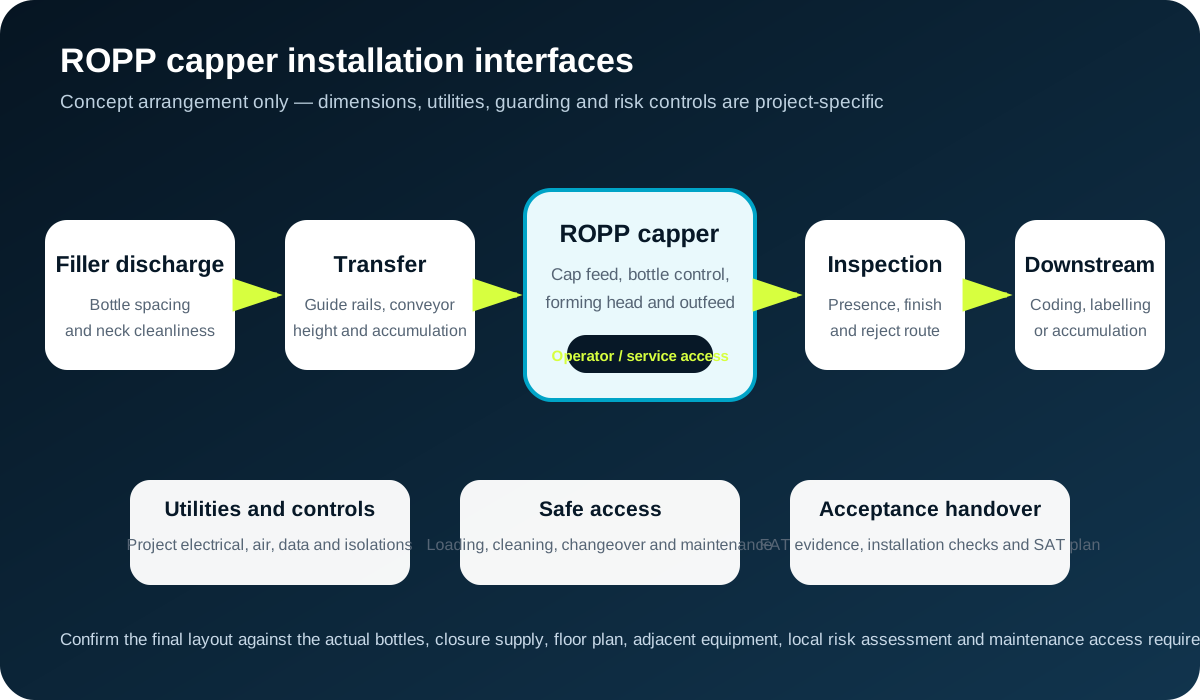
A successful installation depends on the machine, packaging and surrounding line being ready at the same time. Confirm the floor plan, access, bottle flow, cap supply, project utilities, controls and acceptance evidence before delivery.
Site preparation
The ROPP capper needs stable bottle infeed, a defined cap-supply route and enough access for operation, cleaning, changeover and maintenance. On an integrated line, conveyor height, guide-rail range, bottle spacing, accumulation and signal ownership should be confirmed against the actual adjacent equipment.
Utilities are project-specific. Use the final machine documentation and order scope to confirm electrical supply, compressed air where applicable, isolations, network or remote-support requirements and any product-environment controls. Do not rely on a general website figure as the installation instruction.
Interface review
Confirm bottle presentation, fill level, neck cleanliness, transfer stability and how the filler stops or releases bottles. Product on the sealing surface can invalidate an otherwise correct cap setting.
Define machine orientation, cap replenishment, operator position, guard access, reject handling, change-parts storage and the route for service components.
Agree inspection, coding, labelling, accumulation and blocked-line response. A backed-up conveyor should not force bottles into the capper or release an uncertain bottle without inspection.
Installation readiness
Assign each item to the machine supplier, customer, electrical contractor, line integrator or packaging owner.
| Workstream | Confirm before installation | Evidence |
|---|---|---|
| Layout and handling | Machine footprint, orientation, conveyor interfaces, access, delivery route and floor condition. | Approved layout, marked-up site survey and delivery method. |
| Utilities | Project electrical and air requirements, isolations, connection points and any data services. | Final utility schedule and responsible installer. |
| Controls | Run permission, ready, stop, fault, blocked-line and emergency-stop boundaries. | Signal/interface schedule and tested I/O list. |
| Packaging | Approved bottle, closure, liner/insert, production lots and cap-feed method. | Sample references, drawings and FAT/SAT test plan. |
| Safety and access | Site-specific risk assessment, guarding interfaces, safe cleaning, changeover and maintenance access. | Authorised review and closed action list. |
| Handover | Training attendees, manuals, spare/change parts, test instruments and acceptance authority. | Commissioning plan and signed training/acceptance records. |
Commissioning sequence
Check level and orientation, guards, services, conveyor alignment, change parts, cap-feed route and the condition of the machine after transport.
Exercise controls, line signals, sensors, modes, safe access and stop/restart logic without production product. Close installation actions before quality trials begin.
Use approved bottles and closures to establish bottle support, head setting, cap presentation and finished-cap inspection. Retain labelled good samples.
Run with the actual upstream and downstream equipment, recording stops, rejects, blocked-line behaviour, cap replenishment and the agreed accepted-output definition.
Train named operators and maintainers on start-up, first-off approval, normal adjustments, changeover, cleaning, fault escalation and record keeping.
FAT-to-SAT handover
The factory acceptance test should identify site-only checks and any open action. The SAT should then prove the installed utilities, real line interfaces, current packaging lots and site operating procedures. Keep the same accepted-bottle definition and test method unless an authorised change is documented.
For a wider project, use the ROPP line-integration guide and the specialist packaging-line resource to define interfaces beyond the capper.
Buyer questions
No. Use the final project documentation and machine nameplate information because utilities vary with model, options, controls and local installation.
Ownership depends on the order scope. Mechanical and electrical interface responsibilities should be listed before delivery.
Provide approved production-equivalent bottles and closures in sufficient quantity for first-off checks, connected-line operation, quality sampling and changeover trials.
Yes. FAT settings, approved samples, deviations and test methods form the starting point, but the installed line and current packaging still need site verification.
Record who was trained, the machine and formats covered, and the procedures for start-up, quality checks, changeover, cleaning, maintenance and fault escalation.
Send the floor plan, conveyor data, cap-supply route, utility schedule, adjacent-machine details and installation timescale.
Safety and technical handover
Confirm the final machine boundary, guarding interfaces, emergency-stop behaviour, isolation points, residual hazards, access for cleaning and maintenance, instructions, declarations and site responsibilities. Reassess the installed assembly where conveyors, feeders or other machines are connected or modified.
Identify what is supplied as one machine or integrated assembly and where adjacent-equipment responsibility changes.
Prove normal operation, cleaning, format change, jam clearance and maintenance access with the intended safeguards and isolation method.
Check instructions, drawings, declarations, training, test records, open actions and authorised acceptance before routine use.
Use the ROPP guarding and machinery-safety planning guide; then define the controls and line-signal boundary.
Lifecycle baseline
Retain the final machine identity, drawings, software or recipe backup, tooling and change-part list, approved settings, lubrication and maintenance instructions, electrical and pneumatic information, guarding records, first-off samples and SAT results. Photograph labelled heads, stations, sensors and replaceable assemblies where permitted.
This baseline reduces ambiguity if a later fault must be compared with the commissioned condition and helps a service request identify the correct machine, pack and test boundary.
Keep controlled copies with the machine record and note every authorised change after handover.